
Restoring a Rare Circa 1909 Friedrich Prein Heirloom Birdcage Action Upright Piano
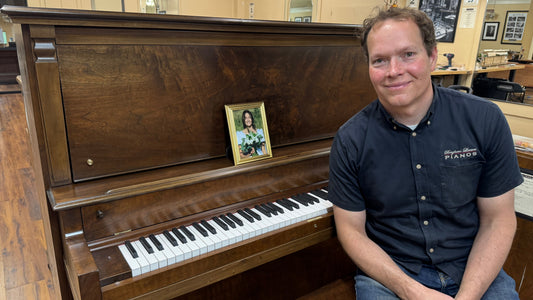
Brigham Larson PianosEvery once in a while, a piano comes through the shop that reminds us just how creative—and sometimes eccentric—piano builders used to be. This particular circa 1909 Friedrich Prein upright piano was one of those instruments.
Built by Friedrich Prein in Cologne, Germany, this piano likely dates somewhere around the turn of the 20th century. The company was established in 1837, and historical records seem to stop around 1909, which gives us a rough timeframe for when this instrument may have been built. While we can’t say with certainty exactly what year it came out of the factory, everything about it screamed “old-world German craftsmanship.”
And also… old-world German complexity.
A Piano Unlike Modern Uprights
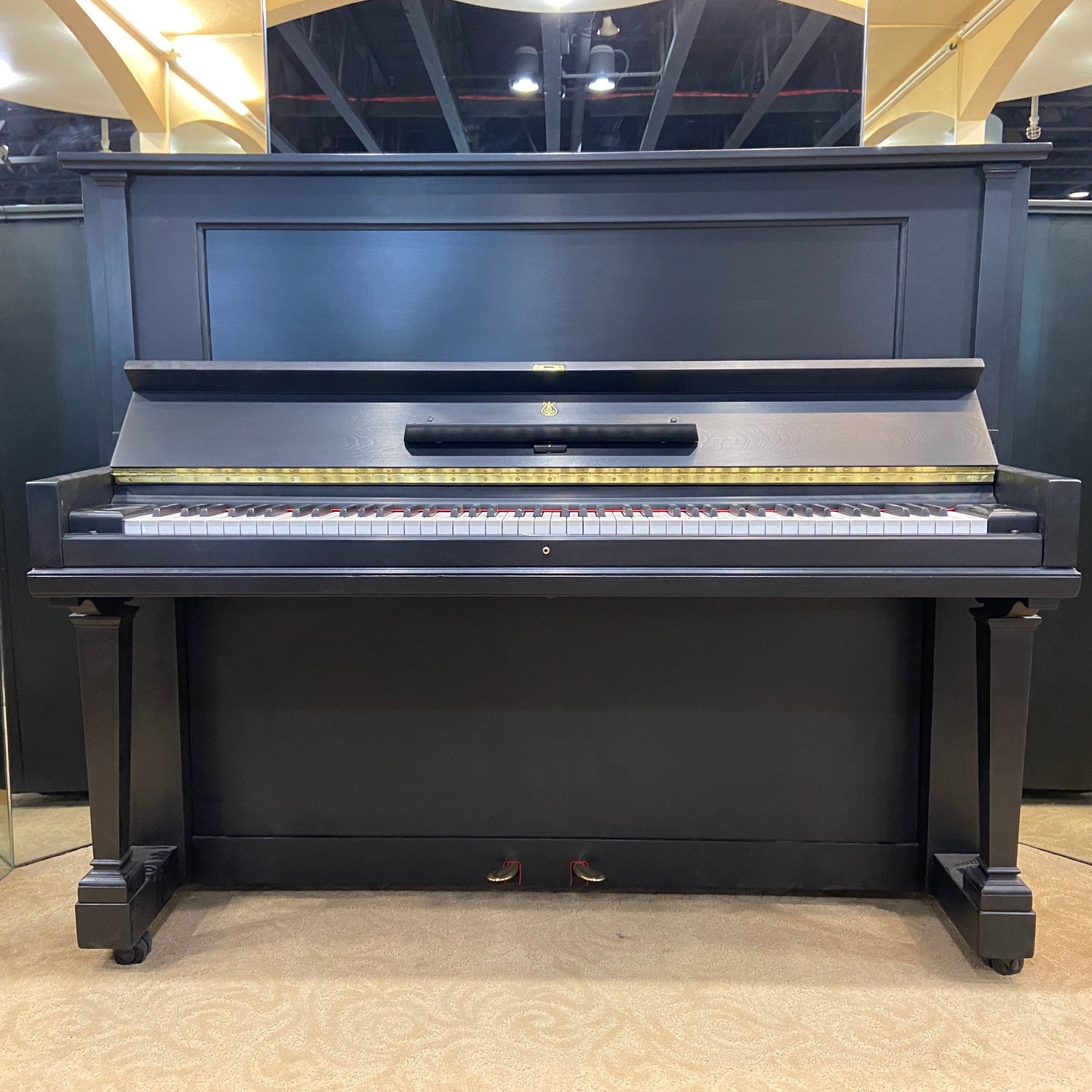
At first glance, the piano looked surprisingly good for its age. The cabinet finish was in remarkable condition, especially considering how old the instrument probably is. Whether it had been refinished at some point or whether the Germans simply built finishes that well back then is hard to say—but either way, the exterior had held up beautifully.
The inside, however, told a different story.
This piano used what’s called a birdcage action, an antiquated action design more commonly found in older English pianos. Unlike modern upright actions, birdcage systems use vertically mounted damper mechanisms with much smaller dampening surfaces. The result is an inherently less effective dampening system compared to modern pianos.
In practical terms, that means notes tend to ring longer, dampers don’t stop the strings as cleanly, and the whole mechanism is more difficult to regulate and restore.
Even by historical standards, this system was already becoming outdated when this piano was built.
Before


German Engineering
As we dug deeper into the restoration, we found all kinds of fascinating design choices.
The plate was unusually thick and heavy for a European upright of this era. Many European pianos from the late 1800s used comparatively light plates, but this one was massively overbuilt—almost like a German industrial machine. The structure felt incredibly robust.
Then there was the bridge design.
The alternating bridge configuration was something highly unusual and unlike anything we commonly see in American pianos. There were also extensive soundboard cracks and significant splitting in the bass bridge that required major repair work.
The ivory keys were original and thankfully still intact, so we preserved those while cleaning and rebushing the keyboard.
The action itself had clearly undergone repairs sometime in the distant past. Some dampers had been replaced, the hammers had been reshaped, and parts of the mechanism had loosened over time. On a piano like this, looseness anywhere in the action creates major problems because everything depends on precision and rigidity.
So the restoration became extensive:
- New hammer butts
- New hammers custom-sized to fit the unusually small scale
- Soundboard crack repairs
- New bass bridge cap
- Extensive action regulation
- Damper adjustments throughout
- Structural rebuilding and stabilization
And perhaps most impressively…
The Upright Pinblock Repair That Almost Shouldn’t Exist
One of the biggest challenges on this project involved the pinblock.
Replacing a pinblock in a grand piano is relatively straightforward once the plate is removed. Uprights, however, are an entirely different story. Everything is glued together—the pinblock is integrated into the structure of the piano itself, attached to the back posts, sides, top structure, and surrounding framework.
On most upright pianos, replacing the pinblock is so difficult that it’s often considered impractical.
So instead of removing the original block entirely, we engineered a different solution.
Using our CNC machine, we carefully cut a trench directly into the existing pinblock structure and fabricated a precisely fitted replacement section. The tolerances were unbelievably tight—only about five thousandths of an inch in some areas.
When the new section was installed, it literally settled into place slowly as trapped air escaped through the microscopic gap.
That level of precision mattered because tuning pins place enormous force on the pinblock under tension. In one earlier attempt with a slightly larger tolerance, the replacement section actually shifted under load. The forces inside a piano are no joke.
After adjustments, glue reinforcement, and careful fitting, the final result performed beautifully. The technicians who handled the restringing and tuning both commented that the tuning pins felt like those of a brand-new piano.
Progress
Progress


Better Than We Ever Expected
Honestly, this piano surprised all of us.
Birdcage actions are usually compromised by design. Even when restored well, they rarely compete with more modern upright systems. But after rebuilding, regulating, and carefully adjusting everything, this instrument absolutely came alive.
The tone became warm, rich, and unexpectedly refined.
The dampening system—despite its limitations—performed far better than anticipated after extensive adjustment work and fresh tension throughout the structure.
In fact, this may genuinely be the best birdcage-action piano we’ve ever heard.
The finished instrument completely surpassed our expectations.
Projects like this are why piano restoration is endlessly fascinating. Even when an instrument uses unfamiliar or outdated systems, the underlying principles of piano design remain the same. With enough patience, precision, and problem-solving, even the strangest old-world designs can sing again.
And this unique family heirloom upright piano now sings beautifully.
After


Is Your Family Heirloom Piano Worth Restoring?
Many old pianos are more than just instruments—they’re family history. They hold memories of grandparents, childhood lessons, holiday gatherings, and generations of music.
Even when a piano seems beyond saving, you might be surprised at what’s possible with proper restoration. This Friedrich Prein upright is a perfect example. What began as an unusual, heavily worn antique with outdated mechanisms and major structural issues became one of the most rewarding restorations we’ve completed.
If you have a family heirloom piano and have wondered whether it can be brought back to life, we’d love to help you find out.
At Brigham Larson Pianos, we specialize in complete piano restoration, rebuilding, refinishing, and repair for antique uprights, grands, and heirloom instruments from all eras.
Schedule Your Free Restoration Evaluation
We offer a free piano restoration evaluation to help determine:
- Whether your piano is a good candidate for restoration
- What level of work it may need
- What kind of musical potential it still has
- And whether restoration makes sense compared to replacement
Every piano has a story. We’d love to help preserve yours.
Contact Brigham Larson Pianos today at 801-701-0113 or info@BrighamLarsonPianos.com to get started with your free evaluation.